Choosing a school often means choosing a board, and many parents are unsure what the difference really is. Both CBSE and ICSE are respected national boards, and students from both go on to top colleges and careers. The difference lies in how each one teaches and tests. Understanding that helps you pick the right fit and support your child better.
Who runs each board
- CBSE (Central Board of Secondary Education) is run by the Government of India. Its schools largely follow NCERT textbooks, which are also the base for national entrance exams such as JEE and NEET.
- ICSE is the Class 10 exam of CISCE (Council for the Indian School Certificate Examinations), a private national board. The Class 12 exam is called ISC.
The key differences at a glance
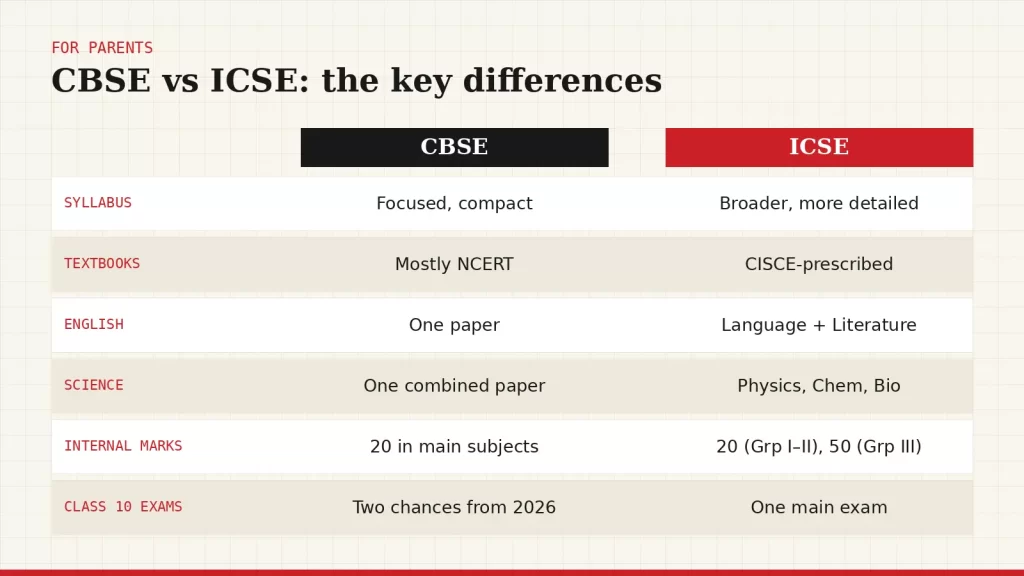
| CBSE | ICSE | |
| Syllabus style | Focused and compact; concept and application based | Broader and more detailed, with more content per subject |
| Textbooks | Mostly NCERT | Prescribed by CISCE; publishers vary by school |
| English | One English paper | Two papers: English Language and English Literature |
| Science | One combined Science paper | Physics, Chemistry and Biology as separate papers |
| Subject choice | Fixed core with a few electives | Three subject groups; students pick from Groups II and III |
| Internal assessment | 20 marks in most main subjects | 20 marks in Groups I and II; 50 marks in Group III subjects |
| Board exams in Class 10 | Two chances from 2026: a main exam in February and an optional improvement exam in May | One main exam, usually February–March |
| Best suited to | Students aiming for JEE, NEET and other national entrance tests | Students who enjoy languages, reading and detailed, project-based work |
CBSE’s two board exams
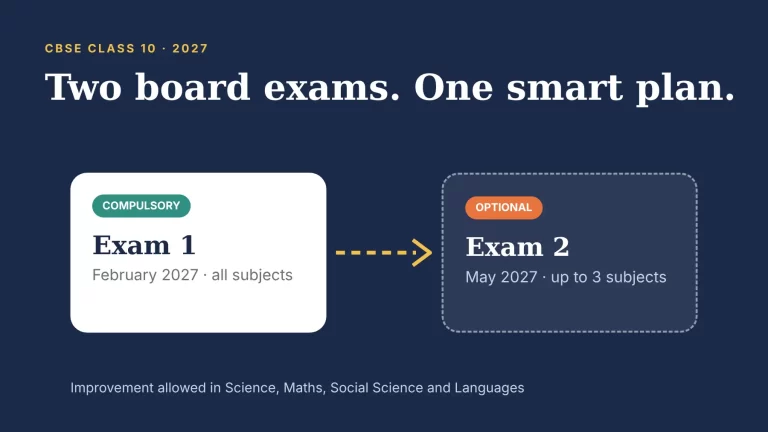
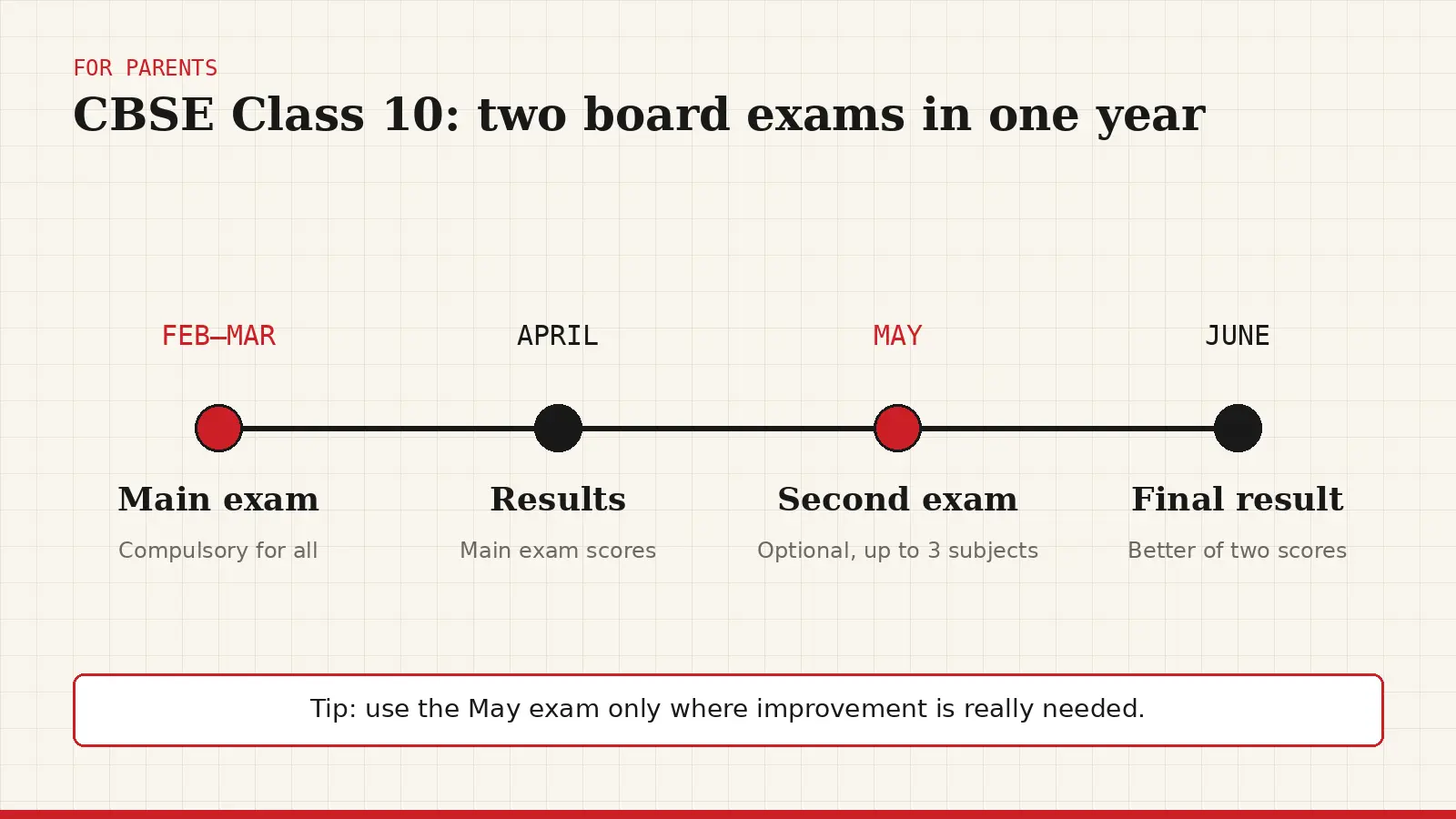
From 2026, CBSE Class 10 students sit a compulsory main exam in February. Those who want to improve can take a second, optional exam in May in up to three subjects, such as Maths, Science, Social Science or a language. The better of the two scores counts. CBSE advises schools to use the second attempt only when improvement is really needed, not as a routine retake.
ICSE’s subject groups
ICSE students study subjects in three groups. Group I is compulsory: English, a second language, and History & Civics with Geography. In Group II they choose subjects such as Maths, Science, Economics or Commercial Studies. Group III offers a practical subject such as Computer Applications, Art or Physical Education, where half the marks come from internal work.
Myths parents often hear
- “ICSE is harder.” It is more detailed, not harder for every child. A strong reader may find it easier than a child who prefers short, direct material.
- “CBSE is only for engineering and medicine.” Its NCERT base helps with entrance exams, but CBSE students go into every field.
- “Switching boards after Class 10 is a problem.” Many students move between boards for Class 11. Expect a few weeks of adjustment, mainly in textbook style.
How to support your child in either board
- CBSE: Make sure NCERT textbooks are read line by line, including in-text questions and examples. Use past papers to practise competency-based questions.
- ICSE: Plan for the larger syllabus by starting revision early. Encourage regular reading to help with English Literature, and treat projects as marks, not extras.
- Both: Track internal assessments and practical deadlines, which are easy to miss and count toward the final result.
The bottom line: there is no “better” board, only a better fit. Look at how your child learns, what they enjoy, and the quality of the school itself, which matters at least as much as the board.