Every parent wants their child to do well in exams. But the line between support and pressure is thin. Constant reminders, comparisons and questions about marks can leave a child more anxious and less focused. The good news: the most helpful things parents can do are simple, and most of them have nothing to do with sitting beside the child while they study.
1. Build a routine, not a rulebook
Children study best when the day has a predictable shape: fixed times for waking up, meals, study and sleep. Sit down together and agree on a weekly timetable rather than handing one over. When the plan is partly theirs, they are far more likely to follow it.
- Keep meal times regular and screens away from the table.
- Protect 8–10 hours of sleep. Late-night cramming costs more than it gains.
- Leave room every day for play, a walk or a hobby.
2. Check revision, gently
You don’t need to know the syllabus to help. A short, friendly check-in works better than a long interrogation.
- Ask them to teach you. “Explain this chapter to me in five minutes” shows what they really understand.
- Look at the plan, not the marks. Ask “Which topics did you finish this week?” instead of “How much did you score?”
- Use practice papers. Offer to time a sample paper on the weekend, then let them check it themselves.
- Keep it to once a day. One calm check-in in the evening is enough.
3. Create a calm home environment
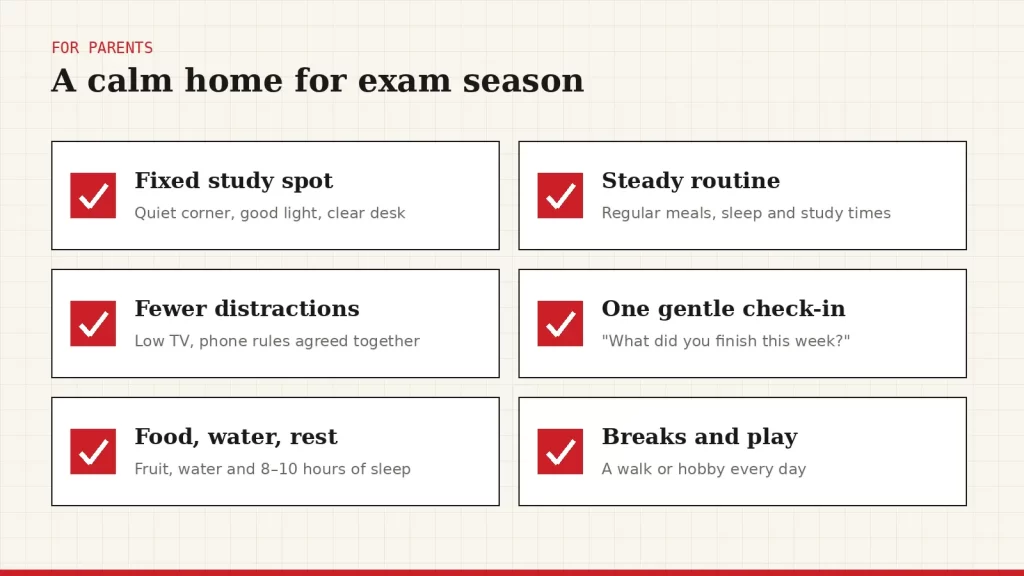
- A fixed study spot: a quiet corner with good light, a clear desk and everything they need within reach.
- Fewer distractions: keep the TV volume low during study hours and agree on phone rules together.
- A calm tone at home: children notice tension between adults and carry it to the desk. Keep arguments and big family decisions away from exam weeks where you can.
- Good food and water: regular meals, fruit and enough water help concentration more than any supplement.
4. Watch what you say
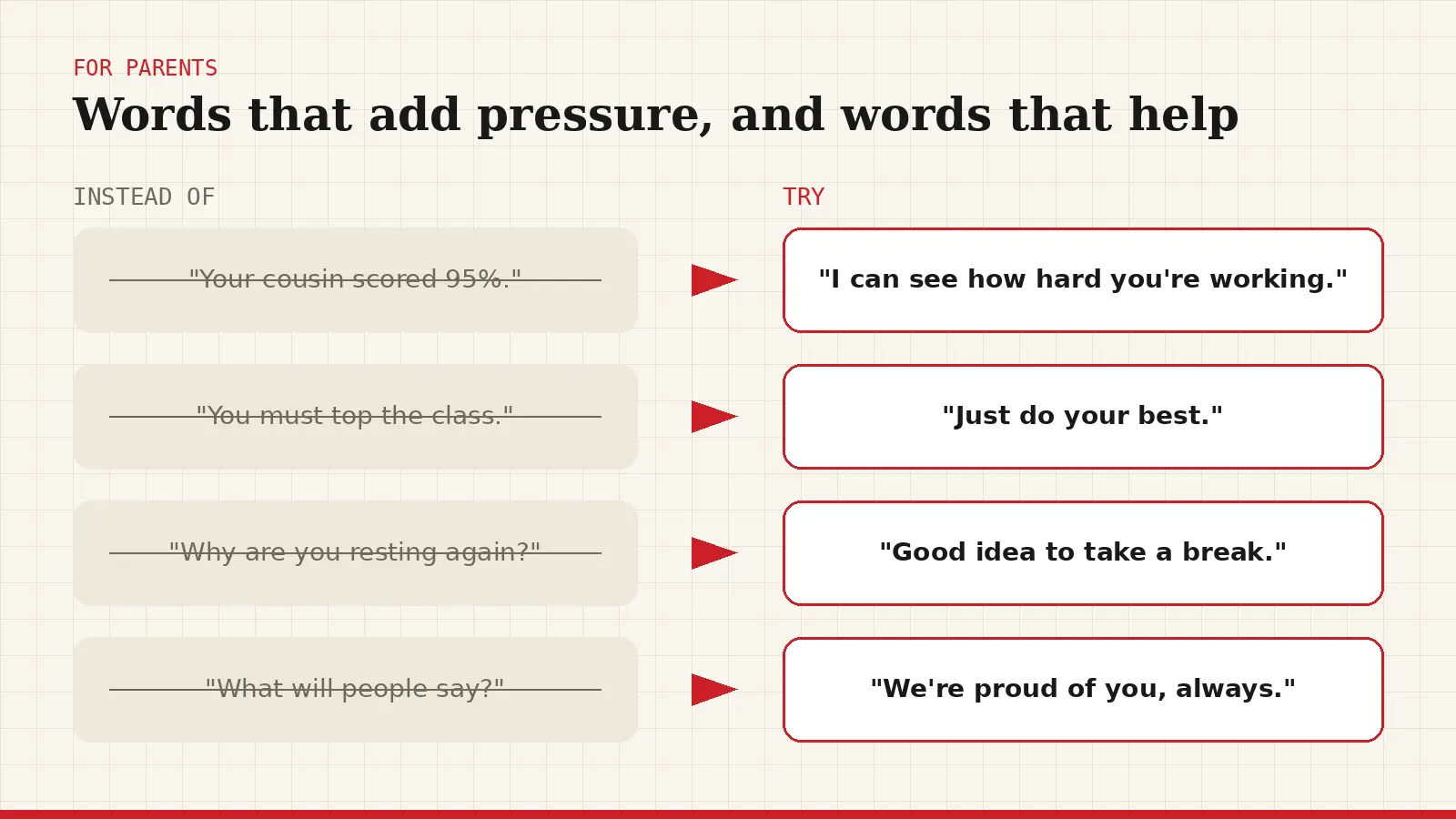
Words stay with children long after the exam is over. A few swaps make a big difference:
| Instead of | Try |
| “Your cousin scored 95%.” | “I can see how hard you’re working.” |
| “You must top the class.” | “Just do your best. That’s all I want.” |
| “Why are you resting again?” | “Good idea to take a break. Want some tea?” |
| “What will people say?” | “Whatever happens, we’re proud of you.” |
5. Notice signs of stress
Some nervousness before exams is normal. Watch for signs that it has become too much: trouble sleeping, skipping meals, frequent headaches or stomach aches, tearfulness, or withdrawing from friends. If you notice these, talk calmly, ease the timetable for a few days, and speak to a class teacher or school counsellor if they continue.
6. On exam day
- Pack the bag, admit card and stationery the night before.
- Serve a light, familiar breakfast and leave early.
- Skip last-minute questions about the syllabus.
- After the paper, ask “How do you feel?” rather than “How many did you get right?” Then move on to the next paper.
Remember: your child needs to know that your love doesn’t depend on their marks. A child who feels safe at home walks into the exam hall with a clearer head, and that is the best preparation you can give.